

Why homeowners choose hardwood
Timeless beauty
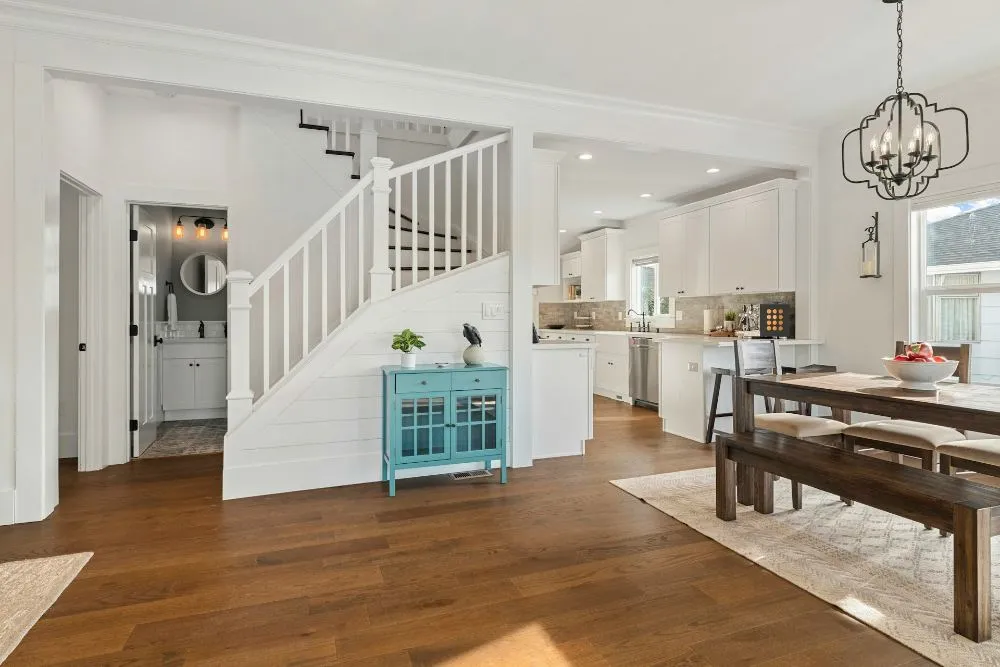
Real wood grain and natural character that never goes out of style and only deepens with age.
Adds home value
Genuine hardwood is one of the most sought-after features by buyers, and a real return on investment.
Refinishable
Solid hardwood can be sanded and refinished many times, letting one floor last generations.
Built for life
With proper care, a hardwood floor can last 50 to 100 years, often outliving the house around it.
What is hardwood?
Any floor with a top surface of real, natural wood, milled from species like oak, hickory, maple, and walnut.
There are two main constructions. Solid hardwood is milled from a single piece of lumber, typically three-quarters of an inch thick, and can be sanded and refinished many times. Engineered hardwood bonds a real hardwood veneer to a stable plywood or high-density core. Identical on the surface, but it resists moisture and movement better.
Both come prefinished or site-finished. The right choice depends on your subfloor, your rooms, and the look you're after, which is exactly what a consultation sorts out.
See your new floor before you commit
Choosing a wood floor from a small sample is hard. Our Room Visualizer previews any hardwood species and stain in a real room: grain, color, and plank width at actual scale. Pick any product in our catalog, tap See This In My Room, then upload a photo of your space.
Hardwood pros & cons
An honest look at where hardwood shines, and where another floor might serve you better.
The benefits: where hardwood wins
Worth knowing
Financing is coming soon
You asked for a way to spread the cost of new floors. We're finalizing a program with Home Solutions Credit now.
How durable is hardwood, really?
With proper care, a solid hardwood floor can last 50 to 100 years, and the ability to refinish is what makes that lifespan possible.
Because solid hardwood is real wood all the way through, it can be sanded down and refinished many times. A floor that looks tired after decades can be brought back to like-new. A generational investment rather than a purchase.
Daily durability depends on species and finish. Harder species like hickory and oak resist dents better, and engineered hardwood handles humidity swings better than solid, making it the more forgiving choice for some Carolina homes.
And when we install it, your floor is covered twice: our own installation warranty, plus the manufacturer's product warranty, which on many lines runs for decades and on some for the life of the floor. We supplied it and we installed it, so any warranty question is one call to us.
Hardwood FAQs
The questions Carolina homeowners ask us most, answered straight.
Understanding hardwood
What is the difference between solid and engineered hardwood?
Solid hardwood is milled from a single piece of wood, usually three-quarters of an inch thick, and can be refinished many times. Engineered hardwood has a real hardwood veneer bonded to a stable plywood or high-density core. On the surface they can look identical, the difference is that engineered handles moisture and temperature changes better and can be installed in more places, while solid offers the longest refinishing life.
Is engineered hardwood real wood?
Yes. Engineered hardwood has a top layer of genuine hardwood, the same species and finish you'd get with solid wood. What's different is the core beneath it, which uses layered wood for stability. You're still walking on and seeing real wood.
Choosing hardwood
Which is better, solid or engineered hardwood?
Neither is universally better, it depends on the space. Solid hardwood is ideal for main living areas over a wood subfloor and where you want maximum refinishing life. Engineered hardwood is the better choice over concrete slabs, in basements, with radiant heat, or anywhere moisture and humidity are a concern. For many Carolina homes, engineered offers welcome peace of mind.
What hardwood species should I choose?
Oak is the most popular for good reason, durable, widely available, and it takes stain beautifully. Hickory is even harder and great for busy households. Maple offers a clean, contemporary look, and walnut brings rich, dark character. Harder species resist dents better, so traffic and pets are worth factoring in. We'll walk you through the options during your consultation.
Durability & lifespan
How long does hardwood flooring last?
Solid hardwood can last 50 to 100 years with proper care, largely because it can be refinished repeatedly. Engineered hardwood typically lasts 20 to 40 years and can often be refinished once or twice depending on the veneer thickness. In practice, condition matters more than theoretical lifespan, a well-maintained floor keeps looking great for decades.
Does hardwood flooring scratch easily?
Real wood can scratch, but the species and finish make a big difference. Harder woods like hickory and oak resist dents and scratches better than softer species, and a quality finish adds real protection. Felt pads under furniture, area rugs in high-traffic paths, and keeping grit swept up go a long way toward keeping a hardwood floor looking new.
Can hardwood floors be refinished?
Solid hardwood can be sanded and refinished many times, which is its signature advantage, a worn floor can be brought back to like-new rather than replaced. Engineered hardwood can usually be refinished once or twice, depending on how thick its wood veneer is. This refinishing ability is a big part of what makes hardwood such a long-term value.
Care & installation
How do I care for hardwood floors?
Sweep or vacuum regularly to keep grit from scratching the finish, and clean with a product made specifically for hardwood, never a wet mop or steam, since standing water and moisture are wood's enemy. Wipe spills promptly, use felt pads under furniture, and place mats at entrances. With that basic routine, a hardwood floor stays beautiful for decades.
Can hardwood be installed over concrete?
Engineered hardwood can be installed over concrete slabs, which is one of its key advantages. Solid hardwood typically requires a wood subfloor and isn't recommended directly over concrete or below grade. If you're working with a slab or a basement, engineered is usually the way to go, we'll assess your subfloor and recommend the right approach.